The Mijikenda are an ethnic group native to the coastal regions of Kenya along the Indian Ocean. They are made up of nine sub-tribes, each with its own language, traditions, and cultural history. These sub-tribes are the Jibana, Kambe, Kauma, Rabai, Ribe, Taveta, Duruma, and Giriama.
The Mijikenda have a strong connection to their ancestral land, which they see as the source of their livelihood and heritage. They practice sustainable land use and show great respect for the natural environment.
One of the most well-known customs among the Mijikenda is the initiation of young boys and girls. The “Female Rites of Passage” for girls involve female genital mutilation, while the “Male Rites of Passage” for boys involve circumcision. These ceremonies mark the transition into adulthood.
Music and dance are important parts of their culture. Instruments such as the xylophone, ngoma (drum), and zeze (stringed instrument) are used during ceremonies and celebrations.
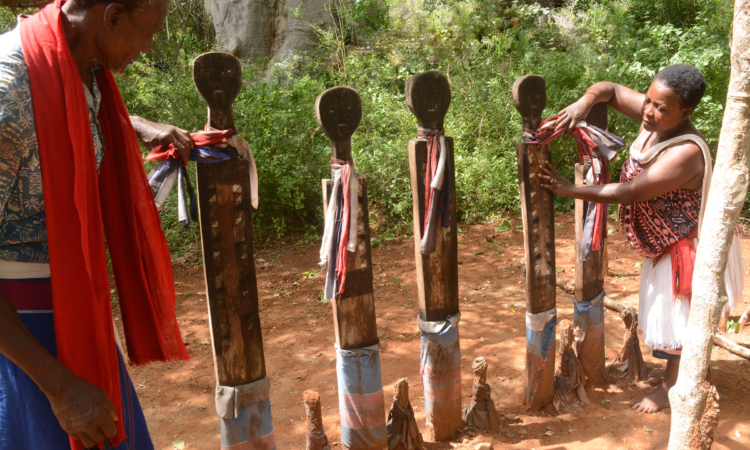
The Mijikenda are skilled artisans, known for woodcarving, basket weaving, and pottery. They use locally available materials like clay, wood, and sisal to create detailed designs. Woodcarvings are especially valuable, providing income for many families and attracting interest from collectors and tourists.
Religion plays a central role in Mijikenda life. They believe in a Supreme Being who governs the universe, as well as various gods and spirits that can influence their lives. Each sub-tribe has its own spiritual practices and sacred shrines where offerings are made and ceremonies are held.
A unique feature of Mijikenda culture is the Kaya – sacred forests that serve as both cultural and spiritual centers. These forests are considered holy ground and are used for rituals, community meetings, and the preservation of traditions. Some of these Kayas are now UNESCO World Heritage Sites.
The Mijikenda have faced challenges such as poverty, land disputes, and limited access to healthcare and education. Despite these issues, they have managed to keep their cultural identity alive, passing traditions from one generation to the next.
Their way of life continues to attract visitors interested in learning about Kenya’s coastal heritage, making the Mijikenda an important part of the country’s cultural landscape.